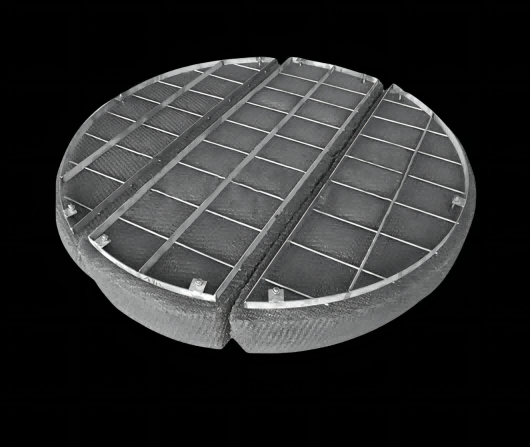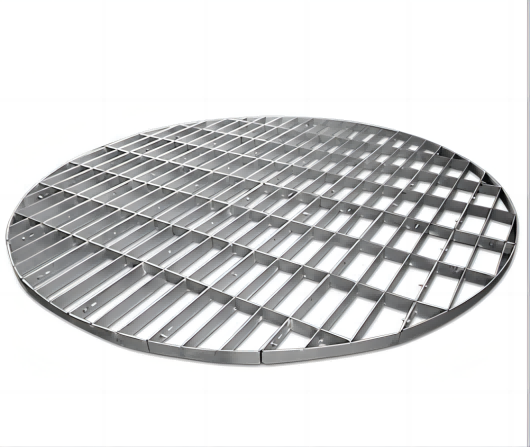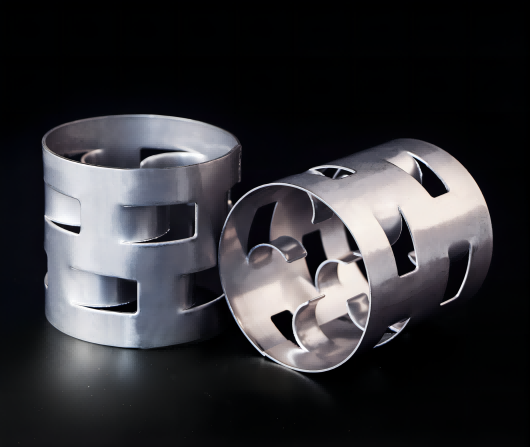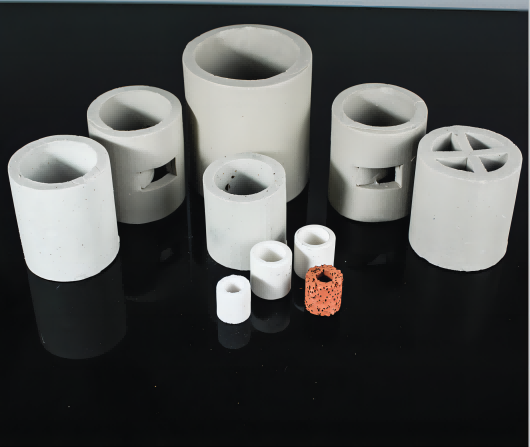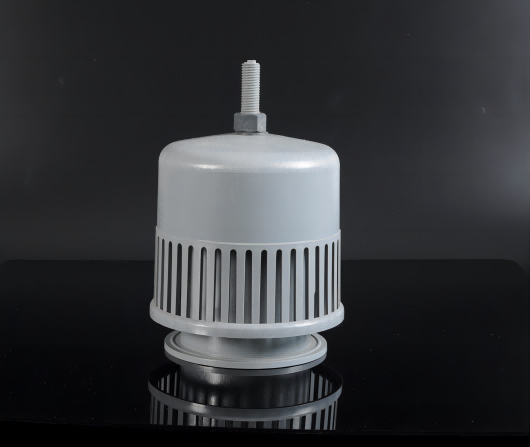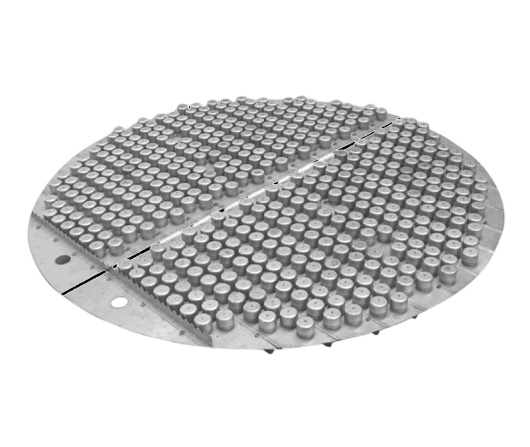

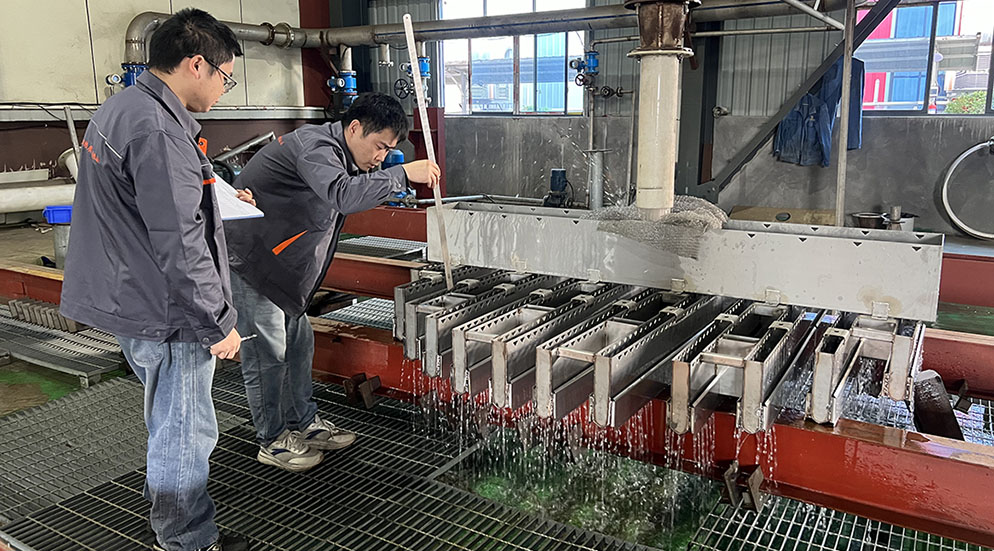
Figure 1: Pan distributor (left), pipe arm distributor (center), and spray nozzle distributor (right).
Design Alert: Choosing the right liquid distributor for your packed column isn't just about uniform irrigation—it's about protecting your packing investment. Industry data shows over 70% of packed column failures trace back to maldistribution, not the packing itself. Get the distributor right, and your column will deliver its rated efficiency from day one.
The relationship between distributor quality and packing performance is exponential. A well-designed distributor with 95% uniformity lets your packing achieve its published HETP (Height Equivalent to a Theoretical Plate). A poor distributor at 60% uniformity can double your HETP, effectively wasting half your tower height.
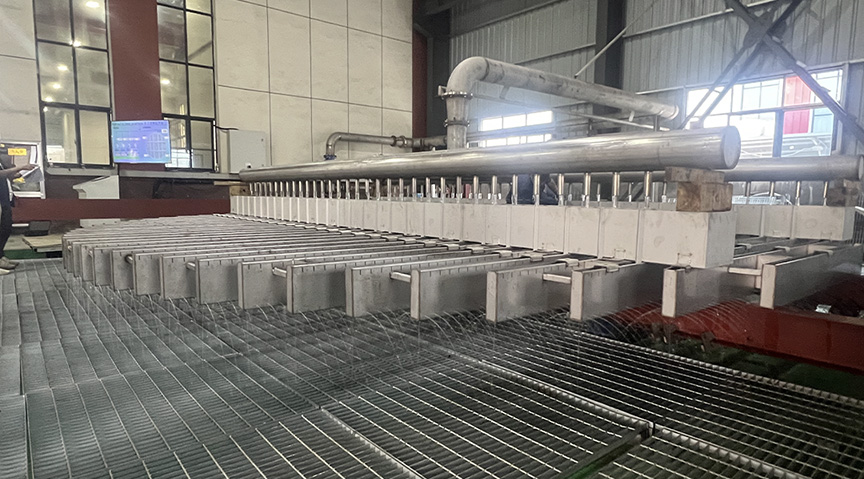
Figure 2: Liquid distributor positioned above the structured packing bed inside a distillation column.
The HETP Impact Formula:HETPactual = HETPpacking ÷ Distribution_Efficiency
Example: A 500Y packing rated at 0.35 m HETP will perform at 0.70 m if your distributor only delivers 50% uniformity. You paid for 500Y performance but got 250Y results.
The gold standard for large-diameter columns. Liquid enters a central feed pipe, flows into a primary trough, then overflows into secondary troughs with V-notches or holes that drip onto the packing below.
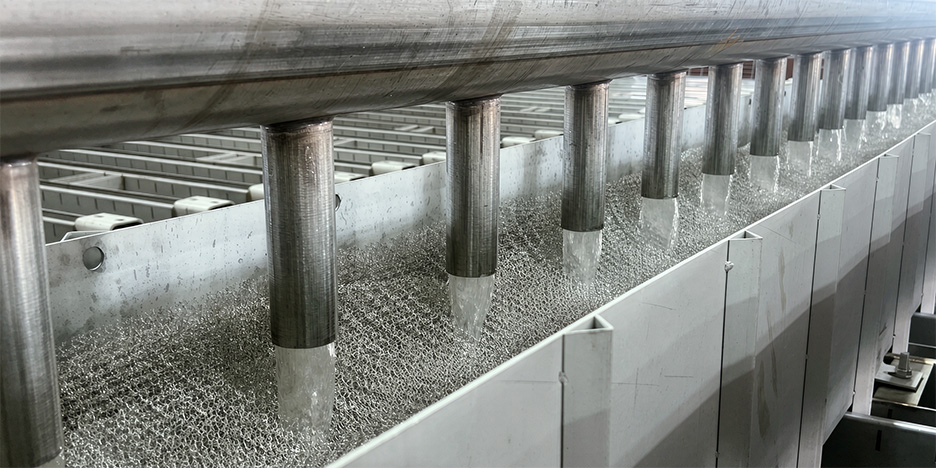
A central header with radiating arms, each drilled with precisely sized orifices. Liquid is forced through the holes by gravity head or slight pressure.
Pressurized liquid is sprayed through nozzles to cover the packing surface. Common in small columns and scrubbers.
| Type | Tower Diameter | Liquid Load | Uniformity | Anti-Fouling |
|---|---|---|---|---|
| Pan (Trough) | 1.5 - 13 m | High | ★★★★★ | Excellent |
| Pipe Arm | 0.5 - 3 m | Medium | ★★★★☆ | Moderate |
| Spray Nozzle | 0.1 - 0.8 m | Low-Medium | ★★★☆☆ | Good |
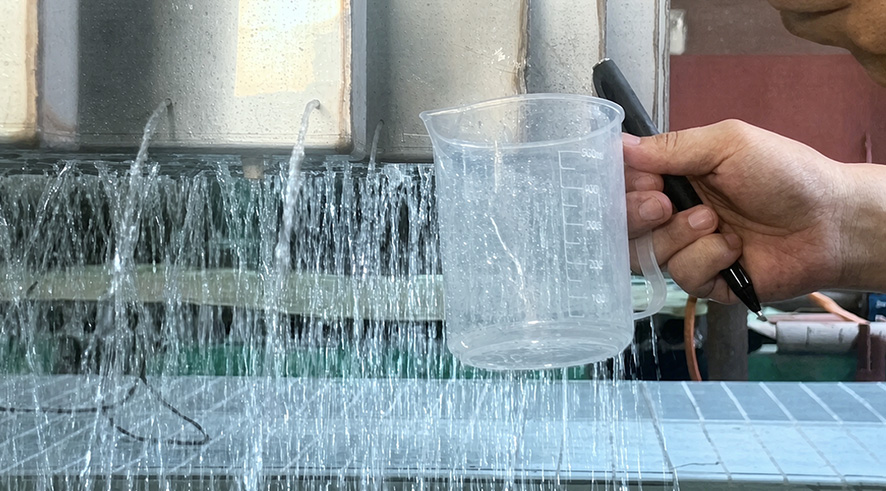
Figure 3: Dye tracer test—uniform distribution (left) vs. severe channeling from a poorly designed distributor (right).
Step 1 — Tower Diameter: < 0.8 m → Spray. 0.5-3 m → Pipe Arm. > 1.5 m → Pan.
Step 2 — Liquid Load Range: Calculate min and max L/G. Pan handles the widest turndown (10:1). Spray nozzles need narrow bands (2:1).
Step 3 — Operating Pressure: Vacuum service? Avoid spray nozzles (entrainment kills vacuum). Use pipe arm or pan.
Step 4 — Fouling Potential: Solids present? Pan with large V-notches or spray nozzles. Avoid small orifices on pipe arms.
Step 5 — Packing Sensitivity: High-efficiency structured packing (500Y, 700Y) demands ≥95% uniformity. Random packing tolerates 80-85%.
The better your packing, the more sensitive it is to distribution quality. A 250Y packing with 20% maldistribution might lose 15% of its efficiency. A 500Y packing under the same maldistribution can lose 40% or more. This is why we always recommend pairing 500Y structured packing with a high-accuracy pan distributor. For a full overview, see our 5-factor packing selection guide.
| Failure Mode | Cause | Prevention |
| Clogging | Solids, coke, or salt (NaCl, CaCO3) deposition | Oversize orifices; specify self-draining design; install strainers |
| Tilt / Out-of-Level | Improper installation or support ring shift | Use spirit level during install; weld support ring with certified flatness |
| Flashing | Pressure drop across feed pipe causes partial vaporization | Increase feed pipe diameter; reduce inlet velocity below 1.5 m/s |
| Weeping | Operating below minimum liquid load | Specify wider turndown; use V-notch instead of drilled holes |
The same corrosion rules that apply to packing apply to distributors—with one extra challenge: stagnant liquid pools. Trough bottoms and dead zones can concentrate corrosives, accelerating attack. For a full material comparison, see our guide on 304 vs 316L structured packing.
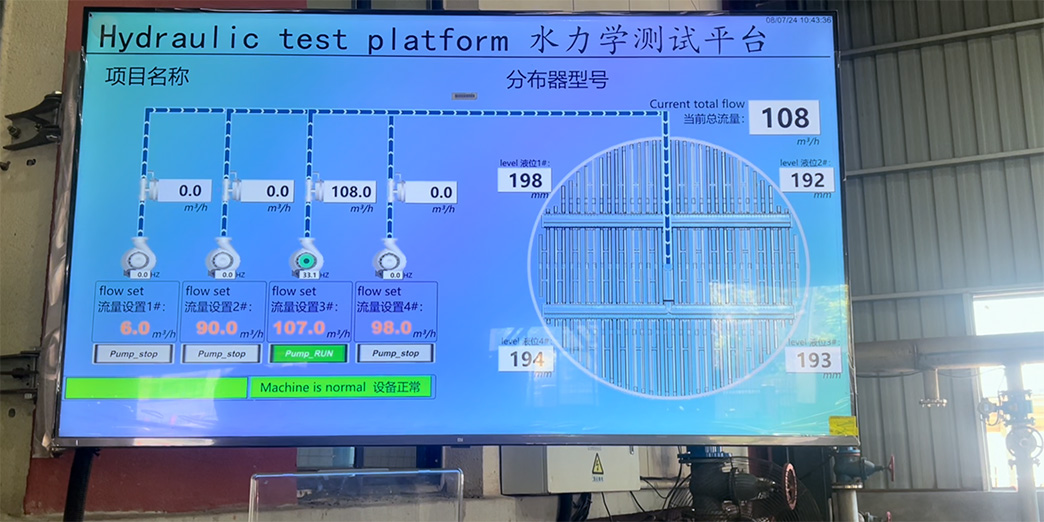
Figure 4: Installing a pan distributor through a manway—proper leveling is critical.

When you choose perforated plate structured packing for its self-redistribution capability, you get a built-in safety margin. The perforations allow liquid to migrate laterally between channels, partially compensating for minor distributor non-uniformity. This makes perforated plate the forgiving choice for revamps where the existing distributor cannot be replaced.
Q: How often should a liquid distributor be inspected?
A: Every turnaround. Even a 10% loss in distribution uniformity can reduce column efficiency by 20-30%. Visual inspection through a borescope or manway takes minutes and prevents months of subpar operation.
Q: Can I reuse an old distributor with new packing?
A: Only if it was originally designed for the packing type you're installing. A distributor built for 250Y will underperform with 500Y because the drip-point density is too low. Always verify drip-point count per m².
Q: What is the ideal drip-point density?
A: For structured packing, aim for one drip point per 50-100 cm² of tower cross-section. Random packing can tolerate one per 100-200 cm².
FXSINO supplies matched liquid distributors, support grids, bed limiters, and structured packing—all engineered together for your specific column. Send us your tower drawings or process data, and we'll deliver a complete internals solution.
Contact FXSINO: jackieqiu9202@gmail.com | +86 18507999558
 عنوان
: Intersection of Jinguang Avenue and Chongqing Middle Road, Anyuan Industrial Park, Anyuan District, Pingxiang City, Jiangxi
عنوان
: Intersection of Jinguang Avenue and Chongqing Middle Road, Anyuan Industrial Park, Anyuan District, Pingxiang City, Jiangxi تل
: +86-18507999558
تل
: +86-18507999558 البريد الإلكتروني
: sales@fxsino.com
البريد الإلكتروني
: sales@fxsino.com واتس اب
:
+86-18507999558
واتس اب
:
+86-18507999558 شبكة IPv6 المدعومة
خريطة الموقع
| XML | المدونة
| سياسة الخصوصية
شبكة IPv6 المدعومة
خريطة الموقع
| XML | المدونة
| سياسة الخصوصية