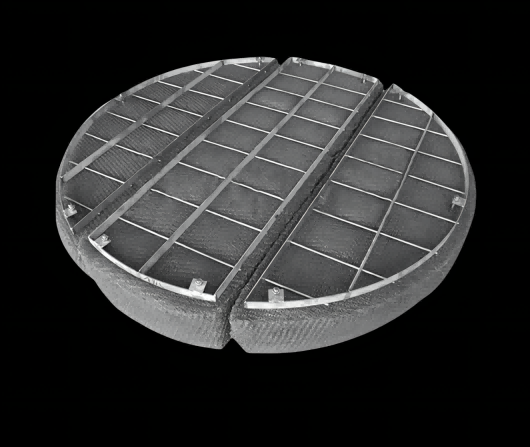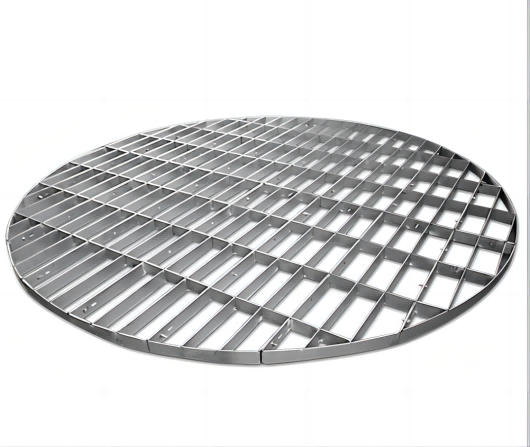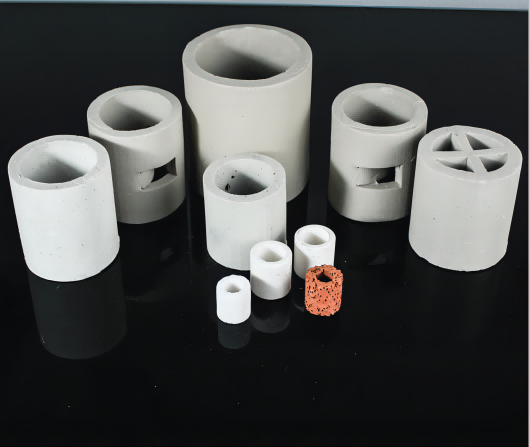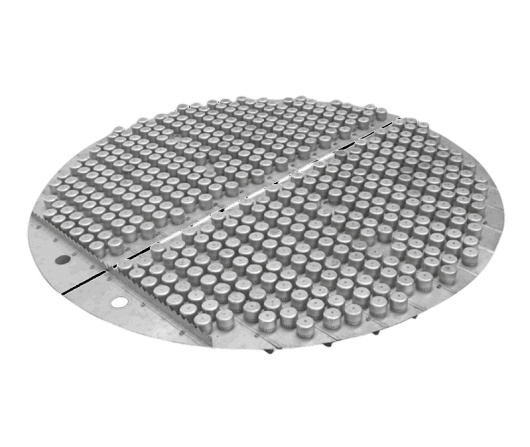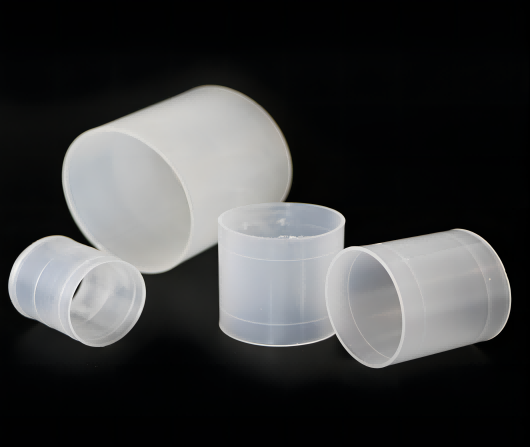

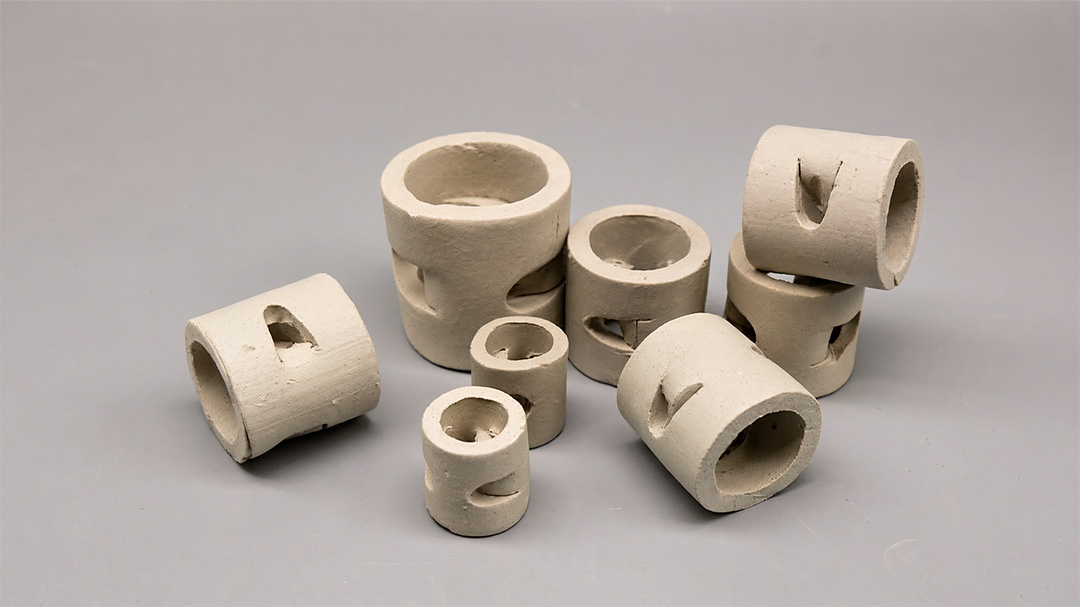
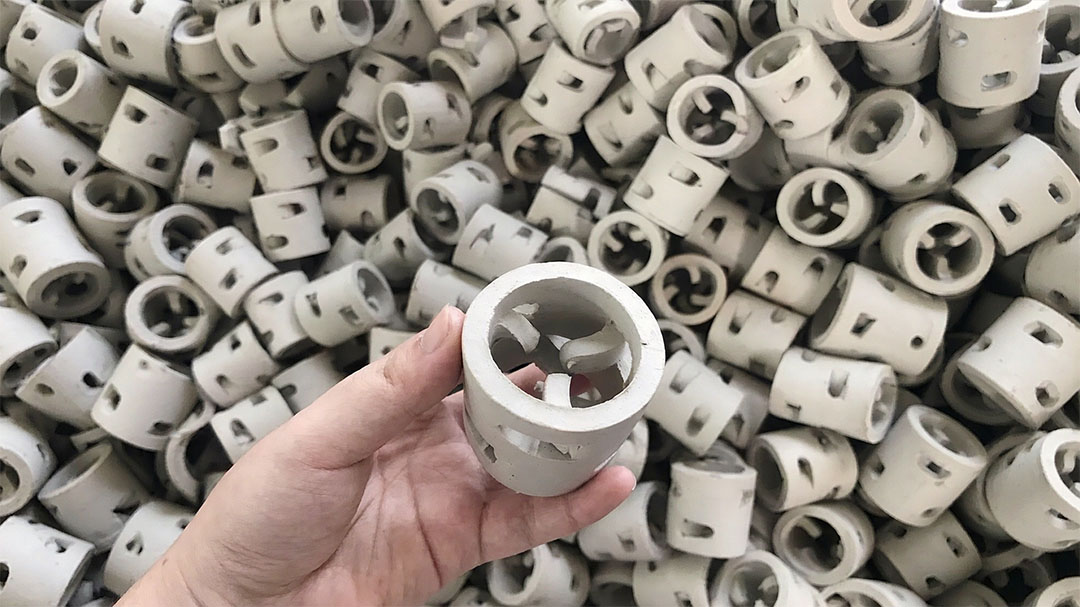
Figure 1: Outer bags look fine, inner contents don't. Shipping damage in ceramic Pall rings is often invisible until you open the right package.
When a shipment of ceramic Pall ring packing arrives with broken pieces inside intact bags, the first reaction is usually "bad quality." Often it isn't. Ceramic is highly compression-resistant but poor at absorbing impact energy — a ring can pass the crush test at the factory and still fracture from a drop, a forklift bump, or 30 days of container vibration [9](@ref). This article covers how ceramic Pall rings actually get damaged in transit, how to package them so it doesn't happen, and how to inspect and accept a shipment without turning a logistics dispute into a tower failure.
Engineer's Brief: Treat packing as a specification, not a favor. Define the carton, the crate, the void fill, the lashing, the breakage allowance and the inspection method in the PO annex. A 1–2% breakage allowance only means something if you also agree whether it's by weight, by piece count, at the factory gate, or at the destination [2,6](@ref).
| Damage mechanism | What it looks like | Where it happens |
|---|---|---|
| Point loading | Local crush, sharp fracture at one edge | Pallet corners, narrow slat contacts, strap lines |
| Vibration & internal collision | Edge chips, ceramic dust, hairline cracks | Throughout the bag over long-haul / sea transit |
| Stacking compression | Bottom-layer fragmentation | Over-stacked pallets, LCL consolidation |
| Forklift / impact shock | Fresh sharp fractures, localized cluster | Loading dock, container stuffing, repositioning |
| Pre-existing microcracks | Cracks propagate later, look "new" on arrival | From firing, handling, warehouse moves |
| Settling / free space | Pieces accelerate inside bag, chip on contact | Under-filled cartons, loose liners |
Mechanisms compiled from ceramic transport-failure analyses [8,9](@ref). Outer packaging can remain intact while internal breakage accumulates — bag condition ≠ product condition.
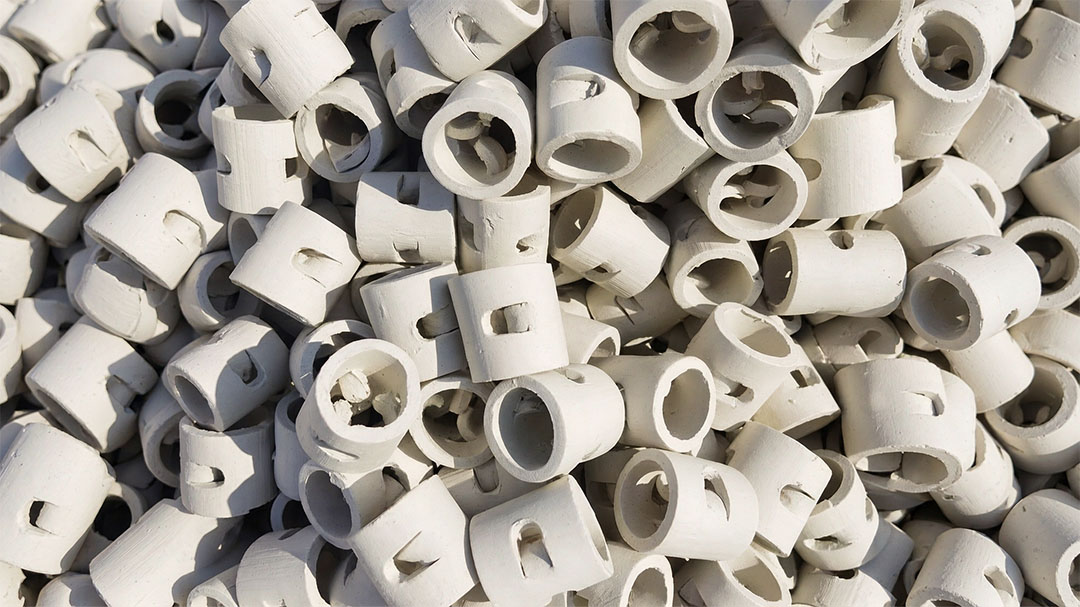
Figure 2: Three-layer protection — inner cushioning, double-wall carton, plywood crate. Shake-test every carton before it closes.
"FRAGILE · THIS SIDE UP · NO HOOKS · NO TOP LOAD · MAX 3 HIGH" on all four sides, plus PO number and batch number. Desiccant pouch inside if the route crosses tropics or the media is moisture-sensitive.
Step 1 — Inspect before unloading: Container door, pallet position, crushed cartons, torn bags, broken straps, water marks, shifted cargo. Photograph abnormalities before anything is rearranged [4](@ref).
Step 2 — Verify identity: Match labels to PO — size, material grade, batch number, quantity. Wrong size is also a "damage" you don't want to discover mid-load.
Step 3 — Sample the right zones: Door area, center, bottom of stack, top of stack, corners. Damage is rarely uniform — top-layer inspection misses bottom-layer crush [4,8](@ref).
Step 4 — Quantify breakage: Pour out a sample bag, separate whole rings / chipped rings / cracked rings / fragments / dust. Weigh the broken fraction.
Step 5 — Tap test: A sound ring gives a clear ring; a dull thud suggests a hidden crack. Cheap, fast, catches what eyes miss [5](@ref).
Step 6 — Keep the packaging: Don't discard cartons, liners, straps or cushions until the commercial disposition is settled — they're part of the evidence [4](@ref).
Step 7 — Document: Photos + tally sheet + transporter receipt notes. A claim without dated photos is just an opinion.
| Condition | Disposition | Why |
|---|---|---|
| Minor edge chip, geometry intact | Usually acceptable* | Doesn't change bed void or load path materially |
| Hairline crack / through-crack | Reject (sort out) | Will propagate under bed load or thermal cycle |
| Broken into 2+ pieces | Reject | Fragments fill voids, raise ΔP, block support grid |
| Excess ceramic fines / dust | Screen before use | Dust migrates, fouls distributor and support |
| Localized crush in one pallet | Claim that pallet only | Likely handling event, not systemic quality issue |
| Widespread breakage across many pallets | Hold whole lot | Packaging or vibration design failure |
*Acceptance thresholds should be written into the PO annex with reference photos. Don't rely on "minor" as a subjective term [6](@ref).
Even a clean shipment can be wrecked on site. Keep rings in original packaging until the moment of transfer, lower — don't drop — with a chute or sock, spread the discharge point around the cross-section, and never rake or walk on the bed [7](@ref). A cracked ring loaded from height is a future ΔP spike.
Q1: The bags arrived intact — can I skip inspection?
A: No. Intact outer packaging does not guarantee intact rings. Vibration and point loads damage contents without tearing the bag. Sample the bottom and corner packages, not just the top [8](@ref).
Q2: What breakage rate is "normal" for ceramic Pall rings?
A: There's no universal number. 1–2% by weight is a common contractual reference for fully fractured pieces, but the basis (weight vs count, factory vs destination, chips vs fragments) must be agreed in writing before dispatch [2,6](@ref).
Q3: Can I screen out the broken pieces and use the rest?
A: Whole rings and minor-chipped rings can go in after sorting. But remove all fragments, dust and cracked pieces first — they migrate into the support grid, raise pressure drop, and undermine the separation you just paid for. Run a pressure drop check after loading if breakage was significant.
FXSINO supplies ceramic Pall rings (porcelain & stoneware, 25–80 mm) with a written export packing spec: foam-interleaved cartons, ISPM-15 crates, dunnage-bagged containers, photo-approved before loading. We also provide batch certificates and a breakage-allowance clause tailored to your Incoterms. Send your PO draft and route — we'll return a packing annex you can attach directly.
Email: jackieqiu9202@gmail.com | +86 18507999558
 عنوان
: Intersection of Jinguang Avenue and Chongqing Middle Road, Anyuan Industrial Park, Anyuan District, Pingxiang City, Jiangxi
 تل
: +86-18507999558
 البريد الإلكتروني
: sales@fxsino.com
 واتس اب
:
+86-18507999558
 شبكة IPv6 المدعومة
خريطة الموقع
| XML | المدونة
| سياسة الخصوصية